
what to do immediately after a car accident
The First Hour After a Car Accident Can Define Everything That Follows
Every summer, roads across New York grow more congested. School is out, travel plans are in full swing, and drivers are logging more miles than at almost any other point in the year. June 2026 is no different. More vehicles on the road means more opportunities for collisions — and more families suddenly thrust into a situation they were never prepared for. If you have just been in a crash, or if you are reading this because you want to be ready in case it ever happens, understanding what to do immediately after a car accident is not just practical advice. It is the difference between a claim that succeeds and one that quietly falls apart before it ever reaches a fair resolution.
The moments right after a collision are chaotic. Your adrenaline is surging. You may be in pain. You may be shaking. Other drivers might be approaching your window. In that environment, it is almost impossible to think clearly — and yet the choices you make in those first sixty minutes carry enormous weight. Insurance companies, investigators, and opposing attorneys will scrutinize everything: what you said, what you did, what photographs were taken, and crucially, what was never documented at all. Getting these early steps right is not about being calculating. It is about protecting yourself so that the truth of what happened can actually be told.
What to Do at the Scene: A Step-by-Step Breakdown
Once a collision occurs and your vehicle has come to a stop, your first priority is always safety and health — yours and anyone else involved. Do not let the pressure of the situation push you past these fundamental steps.
- Check yourself and others for injuries. Before anything else, assess whether you or your passengers are hurt. Even if you feel fine initially, do not assume you are uninjured. Adrenaline can mask pain from whiplash, soft tissue damage, and even more serious internal injuries. If anyone appears seriously hurt, do not move them unless there is an immediate danger such as fire.
- Call 911. Report the accident to law enforcement regardless of how minor it appears. A police report creates an official record of the incident — something that becomes essential when insurance claims and legal proceedings begin. In New York, you are generally required to report accidents that result in injury or significant property damage.
- Move to a safe location if possible. If the vehicles are drivable and it is safe to do so, move them out of active traffic lanes to prevent secondary accidents. Turn on hazard lights immediately.
- Do not admit fault — for anything. This is one of the most important rules at the scene. Even a casual, seemingly polite comment like "I'm so sorry, I didn't see you" can be interpreted as an admission of liability. Fault in a car accident is a legal determination based on evidence, witness accounts, traffic laws, and investigation. What feels true in a moment of shock may not reflect the full picture.
- Exchange information with the other driver. Collect the other driver's full name, contact information, driver's license number, license plate number, and insurance details including the provider name and policy number. Be factual and brief in your conversation.
- Document the scene thoroughly. If you are physically able, use your phone to photograph everything: the position of both vehicles, visible damage, skid marks, road conditions, traffic signals, street signs, and any visible injuries. Take wide shots and close-ups. The more visual documentation you have from the scene, the harder it becomes for anyone to later misrepresent what occurred.
- Gather witness information. If bystanders saw the accident, ask for their names and phone numbers. Independent witness accounts can be invaluable when fault is disputed. Do not rely on memory alone — write the information down or save it in your phone immediately.
- Seek medical attention promptly. Even if you declined an ambulance at the scene, visit an emergency room, urgent care center, or your physician as soon as possible — ideally the same day. Many serious injuries from car accidents, including concussions and spinal injuries, do not produce immediate obvious symptoms. Delaying medical care also gives insurance companies an opening to argue that your injuries were not caused by the accident or were not serious enough to require urgent treatment.
Why the First Hour Is Already Being Watched
Here is something most accident victims do not realize until it is too late: the moment a collision is reported, insurance companies begin building their file. That process often starts with a phone call — sometimes within hours of the accident — during which an adjuster will attempt to record your account of what happened. These conversations are not neutral. Adjusters are trained professionals whose job, in part, is to gather information that can be used to limit the insurer's payout. A statement made while you are still in shock, before you have seen a doctor, and before you fully understand the extent of your injuries, can seriously undermine your ability to recover fair compensation later.
This is not speculation about bad intentions. It is simply how the insurance claims process works. Both the other driver's insurer and, in many cases, your own insurance company have financial interests that do not automatically align with yours. Understanding that dynamic early — before you pick up that first phone call from an adjuster — puts you in a far stronger position. The car and truck accident attorneys at The Selvin Law Firm put it plainly: from the moment you are injured, insurance companies are preparing to get the better of you. Knowing that truth, and acting accordingly, is the first step toward protecting your rights.
The scene of the accident is where your case begins. The photographs you take, the witnesses you speak to, the statements you do and do not make, and the medical care you seek — all of it forms the earliest layer of evidence in what may become a significant legal claim. Treating those first sixty minutes with care and intention is not an overreaction. It is the foundation on which everything else is built.
How Insurance Companies Move Against You Before You Even Leave the Scene
Most people assume the hardest part of a car accident is the crash itself. In reality, the moments and days that follow can be just as damaging — not physically, but legally and financially. Insurance companies are structured to move quickly, and they do not move in your favor. The second a claim enters their system, their adjusters, recorded line protocols, and legal teams go to work finding ways to reduce what they owe you. Understanding this dynamic is not meant to frighten you. It is meant to prepare you.
Here is the key thing to know: both your own insurance carrier and the at-fault driver's insurance company have interests that are separate from yours. Your carrier wants to limit how much it pays out in no-fault benefits. The other driver's insurer wants to minimize any settlement or judgment. Neither of them is on your side, regardless of how friendly or sympathetic the adjuster on the phone may sound.
The Recorded Statement Trap
One of the earliest and most effective tools insurers use is the recorded statement request. Within hours or days of an accident, you may receive a call from an adjuster asking to record a brief conversation about what happened. They frame it as routine, as simply gathering the facts. What they are actually doing is creating a document they can use against you later.
In these calls, adjusters are trained to ask questions in ways that lead you toward minimizing your injuries or accepting partial blame. Common examples include:
- "On a scale of one to ten, how would you rate your pain right now?" — Early pain ratings often don't reflect how injuries develop over days or weeks.
- "Were you wearing your seatbelt?" — This can be used to argue comparative negligence.
- "Where exactly were you going?" — Seemingly harmless details can be used to challenge your account of the accident.
- "Do you feel okay enough to return to work soon?" — An offhand "I think so" can be used to contest future lost wage claims.
You are not legally required to give a recorded statement to the other driver's insurance company. Yet many accident victims do so without realizing the consequences, simply because they feel obligated to cooperate. That instinct to be helpful can become one of the most costly mistakes you make after a crash.
Why Your Own Insurance Company Is Not Automatically Your Ally
This is a point that surprises many people. In New York, the no-fault insurance system requires your own auto insurer to cover certain medical expenses and lost wages regardless of who caused the accident. That might sound like a benefit — and it is, in theory. But in practice, no-fault insurers regularly schedule Independent Medical Examinations (IMEs) through doctors they select, who are known to issue reports that cut off benefits early. They also conduct Examinations Under Oath (EUOs), where you are questioned under oath about your accident and treatment history.
If you attend these examinations without understanding your rights, or without legal representation guiding you through the process, you risk having your no-fault benefits terminated before your treatment is complete. The process is designed to be bureaucratic and intimidating enough that many claimants give up or accept less than they are entitled to.
The Real Cost of Waiting to Get Legal Help
One of the most consistent patterns in personal injury cases is that delays hurt claimants. Evidence fades. Witnesses become harder to locate. Medical records become more difficult to connect directly to the accident if treatment gaps exist. Surveillance footage from nearby businesses or traffic cameras gets overwritten. The longer a victim waits to secure legal representation, the more these factors erode the strength of their case.
Insurance adjusters know this. They are not opposed to letting time pass while a claimant remains unrepresented. Every week that goes by without a formal legal claim is a week the insurer can use to build its defense, gather its own evidence, and prepare arguments about why your injuries were pre-existing or your damages are overstated.
- Scene evidence such as skid marks, debris, and vehicle positioning disappears quickly after an accident.
- Witness memories degrade — people forget details, move away, or become harder to contact.
- A gap in medical treatment, even a short one, can be used to argue that your injuries were not serious.
- Social media posts made while a claim is pending are regularly monitored by insurance investigators.
What a Law Firm Actually Does to Shield You From These Tactics
When you have legal representation from the outset, the dynamic with insurance companies shifts immediately. Adjusters who would otherwise call you directly must go through your attorney. Recorded statements are no longer something you navigate alone. Your lawyer communicates on your behalf, ensuring that nothing you say is used to undercut your claim. At the same time, your attorney begins building the affirmative case — gathering the evidence, medical documentation, and witness accounts that establish what actually happened and what it has cost you.
As stated directly on The Selvin Law Firm's car and truck accidents page, the firm handles communications with insurance companies from the start so that clients can focus on what matters most — their medical recovery. This is not just a procedural benefit. It is a protection against the pressure tactics that lead so many unrepresented accident victims to settle for far less than their cases are worth.
Beyond managing insurer communications, experienced legal representation means your case is being documented and developed with trial in mind. That matters even if your case ultimately settles, which most do. Insurance companies assess the strength of the opposing legal team. When they know a firm is fully prepared to take a case to trial, they take that case more seriously during settlement negotiations. A claimant without an attorney — or with an attorney who signals an eagerness to settle quickly — puts themselves at a disadvantage before negotiations even begin.
Medical Treatment and Legal Strategy Go Hand in Hand
Another area where victims often inadvertently damage their own claims is medical treatment. After an accident, it is common to feel a surge of adrenaline that masks pain. Many people decline ambulance transport at the scene, drive home, and wait to see if they feel better the next morning. When they do seek treatment — sometimes days later — the gap in care becomes a point insurers use to argue the injuries were not caused by the accident.
Seeking prompt medical evaluation after any collision is important both for your health and for the integrity of your legal claim. Injuries such as whiplash, soft tissue damage, and concussion symptoms can take time to fully manifest. Having a medical record that begins immediately after the accident creates a clear, contemporaneous link between the crash and your injuries.
- Do not wait for pain to become severe before seeing a doctor — document your condition early.
- Follow all treatment recommendations from your physicians and attend every scheduled appointment.
- Keep records of all out-of-pocket expenses related to your injury, including transportation to appointments.
- Inform your doctors of every symptom, even those that seem minor — undisclosed symptoms that emerge later are harder to connect to the original accident.
Your legal team should be working in parallel with your medical treatment — not waiting until you are fully recovered to start building your case. The two tracks, medical and legal, are most effective when they run simultaneously from the earliest days after an accident.
Your Next Move After a Car or Truck Accident
Once the dust has settled and you are away from the scene, one truth becomes clear: the decisions you make in the days immediately following a car or truck accident will have a direct impact on the outcome of your claim. Insurance companies are already mobilizing. Adjusters are reviewing your recorded statements. Legal teams on the other side are identifying weaknesses in your case. The single most effective thing you can do to level that playing field is to put an experienced legal team in your corner — and do it quickly.
This is exactly where The Selvin Law Firm, PLLC steps in. From the very first consultation, the firm takes deliberate, strategic action to build the strongest possible case on your behalf. There is no guesswork, no delay, and no leaving your rights to chance.
How The Selvin Law Firm Approaches Your Case
The firm's process is built around three clear, focused stages — each one designed to put you in the strongest position possible, whether your case resolves through negotiation or goes all the way to trial.
- Planning the case: Every car and truck accident is different. The legal team begins by developing a personalized strategy that reflects the specific facts of your situation — the type of collision, the parties involved, the severity of your injuries, and the insurance landscape at play. There is no cookie-cutter approach here.
- Evaluating the situation: This stage involves gathering every piece of critical evidence available — accident reports, photographs, witness statements, medical records, and expert consultations. Injuries are documented thoroughly. Damages are accounted for. Nothing that supports your case is left on the table.
- Filing the case to the court: With a comprehensive strategy and a strong evidentiary record, the firm files your claim with the confidence that comes from thorough preparation. Opposing parties and their insurers are put on notice that this case is trial-ready — which is often precisely the leverage needed to secure a fair and just resolution.
That final point matters more than many accident victims realize. Insurance companies are experienced at identifying claimants who are represented by attorneys who never actually go to trial. When the opposing side knows that your legal team is fully prepared to stand before a judge and jury, the entire negotiation dynamic shifts in your favor.
What You May Be Entitled to Recover
If you were injured due to another driver's negligence, the law may entitle you to compensation across several categories. Understanding what is potentially at stake reinforces why protecting your claim from the very beginning is so important.
- Lost wages and diminished earning capacity if your injuries prevent you from returning to work
- Medical expenses, including hospital bills, specialist visits, surgery, physical therapy, and ongoing care
- Pain and suffering related to the physical and emotional impact of the accident
- Property damage to your vehicle or other personal belongings
- In cases involving commercial trucks, additional avenues of liability may exist, including the trucking company, cargo loaders, or vehicle maintenance contractors
Each of these categories requires careful documentation and legal strategy. Without proper representation, injured victims routinely accept settlements that fall far short of what they are truly owed — often without realizing it until it is too late to revisit the claim.
Time Is a Factor You Cannot Afford to Ignore
New York's statute of limitations for personal injury claims is not unlimited. Waiting too long to consult an attorney can mean losing the ability to recover compensation entirely. Beyond the legal deadline, evidence degrades over time. Witnesses become harder to locate. Surveillance footage gets overwritten. The sooner you have legal representation in place, the more complete and compelling your case can be built.
With summer 2026 already well underway and road traffic at its seasonal peak, the risk of being involved in — or affected by — a serious collision is as real as it gets right now. Whether you were injured recently or are still navigating the aftermath of an accident that occurred weeks ago, there is no better time than today to take action.
Take the First Step Today
You do not have to face insurance companies, medical bills, and legal deadlines on your own. The Selvin Law Firm, PLLC handles the pressure so you can focus on healing. From the first phone call through the resolution of your case, the firm's team works to ensure your rights are protected, your voice is heard, and your claim is pursued with the full force it deserves.
Call 516-992-0805 today to speak with the team, or reach out online to get in touch. The sooner you act, the stronger your case — and the better your chances of securing the fair and just outcome you deserve.

SHARE POSTS:
Leave a Comment
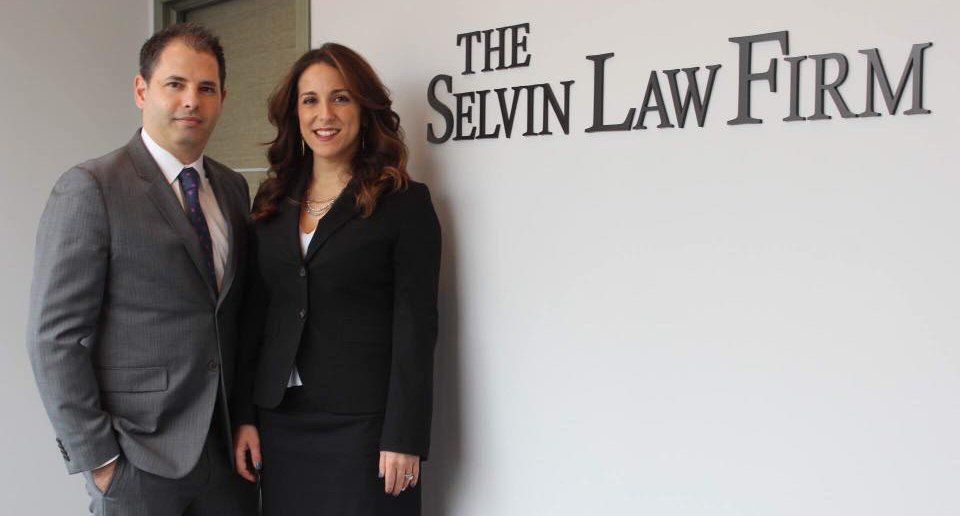
The Selvin Law Firm, PLLC
We bring each client a combination of deep industry knowledge and expert perspectives from other industries on the challenge at stake.
About - Website Lead
Categories
• Medical Malpractice
• Car and truck accidents
• Slips trips and falls
• Dog Bites
• Pedestrian Accidents
• Construction Accidents
• Premises Liability
• Nursing Home Negligence
Recent Posts


Newsletter