
Injured on Someone Else's Property in NY? Here's Exactly How Premises Liability Works
Summer in New York hits differently in 2026. As temperatures climb and daily life spills outdoors, the city and its suburbs pulse with energy — crowded supermarkets, packed shopping centers, outdoor dining patios, community pools, apartment courtyards, and beachside boardwalks all see a surge in foot traffic. More people moving through more spaces means more opportunity for something to go wrong. And when property owners fail to keep up with the maintenance demands of a busy season, real people get hurt.
If you were recently injured on someone else's property — whether it was a wet floor in a grocery store, a cracked sidewalk outside a retail strip, a dimly lit stairwell in your apartment building, or an unsafe pool deck at a public facility — you are likely asking some version of the same question: do I actually have a case? The answer depends on understanding how premises liability works in New York, and the honest truth is that the law in this state is more nuanced than most people realize. Before you speak to an insurance adjuster, before you accept any kind of settlement offer, and before you assume your injury was simply bad luck, it is worth taking the time to understand your rights.
Premises liability is the area of law that holds property owners, landlords, businesses, and property managers legally responsible when someone is injured due to an unsafe or poorly maintained condition on their property. In New York, this body of law is well-established, but it is not always straightforward to apply. Whether your claim succeeds often comes down to specific legal elements, the evidence available, and whether you have the right legal team in your corner from the start.
What Premises Liability Actually Means for Injured New Yorkers
At its core, premises liability is about accountability. When you visit a store, walk through a parking lot, rent an apartment, or attend an event at a private venue, you have a reasonable expectation that the space has been maintained with your safety in mind. New York law reinforces this expectation by placing a legal duty of care on property owners — an obligation to keep their premises in a reasonably safe condition for people who have a right to be there.
When that duty is neglected and someone gets hurt as a result, the law provides a path to compensation. But pursuing that path requires proving several things, and this is where many injured victims run into difficulty on their own. A successful premises liability claim in New York generally requires establishing the following:
- The property owner owed the injured person a duty of care
- The property owner breached that duty by allowing a hazardous condition to exist
- The hazardous condition directly caused the injury
- The injury resulted in measurable damages — medical bills, lost income, pain and suffering, and more
Each of these elements requires evidence, and the strength of that evidence can make or break a claim. This is why acting quickly after an injury matters. Surveillance footage gets overwritten, maintenance records disappear, and witnesses become harder to locate as time passes. The sooner an experienced attorney begins investigating, the better your chances of building a compelling case.
The Types of Incidents That Fall Under Premises Liability
Many people associate premises liability exclusively with slip-and-fall accidents, and while those are among the most common cases, the legal concept covers a much broader range of situations. In New York, property owners can be held liable for injuries arising from a wide variety of conditions, including:
- Wet, slippery, or recently mopped floors without adequate warning signs
- Broken or uneven sidewalks and walkways
- Icy steps or unsalted pathways during winter months — and even late spring or early summer cold snaps
- Poorly lit stairwells, hallways, and parking structures
- Defective or unstable staircases, railings, escalators, and elevators
- Unsafe structural conditions in buildings or commercial spaces
- Negligent security that allows assaults or harm to occur on private property
- Dog bites and injuries caused by unrestrained animals on a property
If you experienced any of these situations and suffered an injury, the question is not simply whether a hazard existed — it is whether the property owner knew or should have known about it and failed to address it. That distinction is at the heart of how premises liability law functions in New York, and it is one of the most important concepts for any injured person to understand before moving forward.
Understanding Who Can Be Held Responsible
One common source of confusion after a property-related injury is figuring out who is actually responsible. In some situations, it is the property owner. In others, it may be a tenant, a property management company, a retailer leasing commercial space, or even a municipality if the injury occurred on public property. New York law recognizes that multiple parties can share responsibility, and identifying all potentially liable parties is a critical early step in any premises liability case.
For instance, if you slipped and fell in a shopping center, the liable party might be the individual store where the fall occurred, the company responsible for maintaining common areas, or the building owner — or some combination of all three. If your injury happened in a rental building due to a broken railing that was reported but never fixed, your landlord or property management company may bear significant responsibility. These distinctions matter enormously when it comes to filing a claim and pursuing full compensation.
If you are trying to make sense of where your situation fits within these categories, speaking with a premises liability lawyer in New York is the most effective way to get a clear, honest picture of your legal options. The Selvin Law Firm offers free consultations for injured victims throughout New York, with no pressure and no obligation — just straightforward legal guidance from attorneys who understand the stakes.
How Premises Liability Actually Works in New York
Understanding the legal framework behind a premises liability claim is the first step toward knowing whether you have a case — and how strong it might be. New York law requires that injured victims prove four core elements to hold a property owner accountable: duty of care, breach of that duty, causation, and damages. Each element matters, and a weakness in any one of them can be used by insurance companies or defense attorneys to undercut your claim.
The duty of care is the starting point. In New York, property owners — whether they own a retail store, an apartment complex, a restaurant, or a private residence — are legally required to maintain their premises in a reasonably safe condition for anyone who enters lawfully. This includes customers, tenants, guests, and in many cases even certain uninvited visitors depending on the circumstances. That obligation doesn't disappear because a business is busy, a landlord is overwhelmed, or a property manager didn't get around to filing a maintenance request.
Breach of that duty occurs when a property owner fails to meet that standard of reasonable care. This can take many forms, including leaving a wet floor unmarked, failing to repair broken steps, allowing icy sidewalks to go untreated, or ignoring a lighting issue in a stairwell or parking lot. The breach doesn't have to be intentional — negligence is enough. What matters is whether a reasonable property owner in the same situation would have recognized and addressed the hazard.
The Notice Requirement: What "Knew or Should Have Known" Really Means
One of the most important — and most contested — aspects of how premises liability works in New York is the concept of notice. To succeed in a premises liability claim, an injured person typically must show that the property owner either knew about the dangerous condition or should have known about it through the exercise of reasonable care. This is what attorneys and courts refer to as actual notice versus constructive notice.
Actual notice means the property owner was directly aware of the hazard — perhaps an employee reported a broken handrail, or a customer complained about a slippery entryway earlier the same day. Constructive notice is broader and, in many ways, more powerful for injured victims. It means the condition existed long enough that a reasonably attentive property owner would have discovered and corrected it before the injury occurred.
Insurance companies and defense attorneys routinely argue that their client had no notice of the hazard — that it appeared suddenly, that no one reported it, that the property was inspected just moments before. This is where evidence becomes critical. Maintenance logs, surveillance footage, prior incident reports, and witness accounts can all help establish that a dangerous condition was not a surprise — it was a known problem that went unaddressed.
- How long had the hazard existed before the accident?
- Were there prior complaints or incidents related to the same condition?
- What do the property's maintenance and inspection records show?
- Is there surveillance footage that captured the condition before the injury occurred?
- Did employees or staff have the opportunity to discover and correct the hazard?
These are the questions that shape a premises liability case in New York — and they're the questions an experienced attorney will begin asking from the very first day of an investigation.
The "Open and Obvious" Defense: A Common Insurance Tactic
If you've already spoken with an insurance adjuster after being injured on someone's property, there's a reasonable chance you heard language suggesting that the hazard was something you should have seen and avoided on your own. This is the foundation of what's known as the "open and obvious" defense, and it is one of the most frequently used arguments to minimize or outright deny premises liability claims in New York.
The argument goes something like this: if a dangerous condition was plainly visible — a wet floor, a raised threshold, an icy patch — then a reasonably attentive person would have noticed it and taken steps to avoid it. Therefore, the property owner bears little or no responsibility for any resulting injury.
But this defense is not absolute, and New York courts have recognized important limitations on it. Even when a hazard is considered "open and obvious," a property owner may still be liable if the condition was inherently dangerous, if visitors were distracted by the nature of the environment (such as a crowded store or a busy entrance), or if the property owner had a duty to correct the hazard regardless of its visibility. The existence of a visible hazard does not necessarily excuse a property owner from their legal obligation to maintain a safe environment — it simply shifts the conversation to comparative fault.
Comparative Negligence in New York and What It Means for Your Claim
New York follows a doctrine known as pure comparative negligence, which has significant implications for anyone injured on another person's property. Under this rule, an injured person can recover compensation even if they were partially at fault for the accident — but their total recovery is reduced by their percentage of fault.
For example, if a court determines that you were 25% responsible for your own injury because you were looking at your phone when you slipped on a wet floor, you would still be entitled to recover 75% of your total damages. This is meaningfully different from states that bar recovery entirely if a victim is found to bear more than a certain percentage of fault. In New York, partial fault does not eliminate your right to compensation — but it can reduce it.
- Insurance companies may try to assign you a higher percentage of fault than is accurate or fair
- Comparative fault arguments are often used to pressure injured victims into accepting lower settlements
- An attorney can challenge inflated fault assessments with evidence that clarifies exactly what happened and why
- Even if you believe you were partly responsible, you may still have a meaningful and valuable claim
This is why understanding how premises liability works in New York goes beyond knowing the basics. The legal process involves real adversarial pressure from insurers and defense teams who have financial incentives to minimize what they pay. A property owner's liability carrier is not on your side — and their adjusters are trained to find ways to reduce or deny your claim from the moment you report the injury.
Navigating these complexities without legal representation puts you at a serious disadvantage. The notice requirement, the open and obvious defense, and comparative fault arguments are all tools that experienced defense attorneys use strategically. An equally experienced premises liability lawyer knows how to anticipate and counter these arguments — and how to build a case strong enough to withstand them at every stage, from initial negotiations through trial if necessary.
Understanding how premises liability works in New York is the first and most important step any injured victim can take. But knowledge alone won't recover your medical bills, replace your lost income, or hold a negligent property owner accountable. That's where having the right legal team makes all the difference — and it's exactly where The Selvin Law Firm steps in.
From Understanding Your Rights to Enforcing Them
New York premises liability law is layered with nuance. Property owners and their insurers know this, and they count on injured victims being too overwhelmed — or too uninformed — to push back effectively. The moment a claim is filed, defense attorneys begin building arguments: the hazard was obvious, you weren't paying attention, the owner had no prior notice. Without experienced legal representation, these tactics can derail even a legitimate claim before it gains traction.
The Selvin Law Firm was built specifically to counter these strategies. With over 30 years of experience in premises liability and personal injury law, the firm's attorneys understand not just the legal framework, but the real-world obstacles that stand between an injured victim and the compensation they deserve. Every case begins with a thorough investigation designed to do one thing: establish the truth about what happened and who is responsible.
How The Selvin Law Firm Builds a Winning Case
Proving a premises liability claim in New York requires more than showing that you were hurt on someone else's property. You must demonstrate that the property owner knew or should have known about the dangerous condition — and failed to act. That evidentiary burden is real, and meeting it takes deliberate, experienced legal work.
Here's what the firm's investigative process typically involves:
- Securing and reviewing surveillance footage from the scene before it can be overwritten or destroyed
- Obtaining maintenance logs, inspection records, and incident reports tied to the property
- Consulting expert witnesses including engineers, safety specialists, and medical professionals
- Documenting the hazardous condition through photographs, measurements, and firsthand testimony
- Building a timeline that demonstrates the property owner had sufficient notice and failed to act
This level of preparation matters — not just for trial, but for settlement negotiations. Insurance companies are far more likely to offer fair compensation when they know they're dealing with a legal team that is fully prepared to take the case before a jury.
Results That Reflect a Commitment to Clients
The Selvin Law Firm has recovered millions for injured clients across New York, and the firm's 92% win rate reflects a disciplined approach to case selection, preparation, and advocacy. These aren't numbers used lightly — they represent real people who came to the firm after devastating injuries, many of them unsure whether they even had a case worth pursuing.
Clients who benefit most from working with the firm include those who are:
- Dealing with serious or permanent injuries that require ongoing medical care
- Facing significant lost wages or reduced earning capacity
- Up against insurance companies that are delaying, minimizing, or outright denying their claims
- Uncertain whether the property owner's partial responsibility affects their ability to recover
- Looking for straightforward legal guidance without any upfront financial risk
That last point matters. Under New York's comparative negligence rules, even if you share some degree of fault for your accident, you may still be entitled to compensation. A seasoned premises liability attorney can assess how that applies to your specific situation and ensure you aren't talked out of a valid claim by an insurer trying to protect its bottom line.
No Fee Unless We Win — No Risk to Get Started
One of the most common reasons injured victims delay speaking with an attorney is financial concern. If you're already facing medical bills and missed paychecks, the last thing you want is another expense. The Selvin Law Firm removes that barrier entirely with a straightforward contingency fee arrangement: you pay nothing unless the firm wins your case. There are no upfront costs, no hidden fees, and no financial risk to getting the legal help you need right now.
This structure means the firm's interests are fully aligned with yours. The Selvin Law Firm only wins when you do — which is precisely why the team invests the time, resources, and expertise necessary to build the strongest possible case from day one.
Offices Across New York — Ready When You Are
With locations in Seaford, Garden City, and Queens, The Selvin Law Firm is positioned to serve injured clients throughout Long Island and New York City. Whether your accident happened in a grocery store, an apartment building, a parking lot, or a public space, the firm's attorneys are ready to evaluate your case and explain your options — clearly, honestly, and without pressure.
Summer 2026 brings crowded public spaces, busy retail environments, and increased foot traffic to outdoor venues across New York. With that activity comes an elevated risk of slip-and-falls, negligent security incidents, and property-related injuries that could affect you or someone you love. If that happens, the decisions you make in the days and weeks immediately following an accident can significantly impact the outcome of your claim.
Don't wait. Don't speak to an insurance adjuster without legal guidance. And don't assume that because a property owner denies responsibility, you have no case. The law may be on your side — and The Selvin Law Firm is ready to prove it. Contact the firm today for a free consultation and take the first step toward the justice and compensation you deserve.

SHARE POSTS:
Leave a Comment
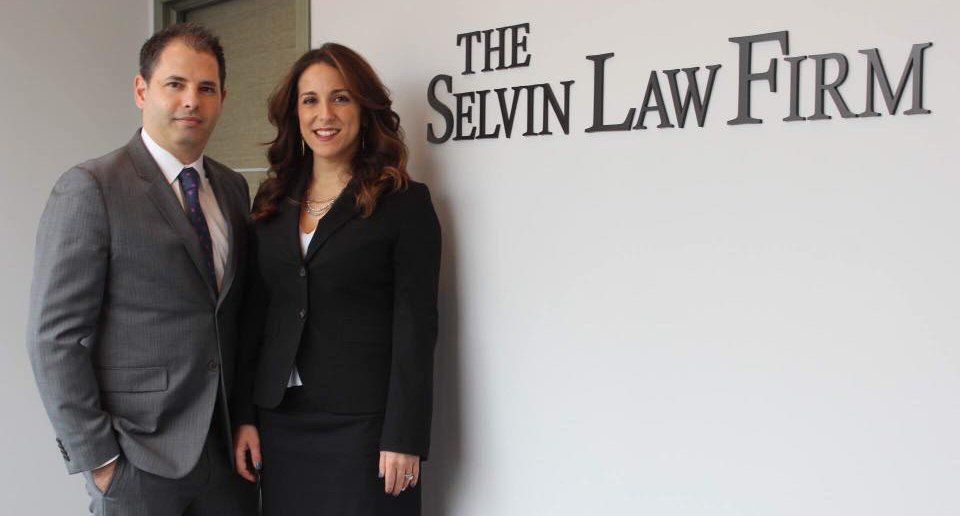
The Selvin Law Firm, PLLC
We bring each client a combination of deep industry knowledge and expert perspectives from other industries on the challenge at stake.
About - Website Lead
Categories
• Medical Malpractice
• Car and truck accidents
• Slips trips and falls
• Dog Bites
• Pedestrian Accidents
• Construction Accidents
• Premises Liability
• Nursing Home Negligence
Recent Posts


Newsletter